Manufacturing Optimization: Lift OEE, Throughput & Quality
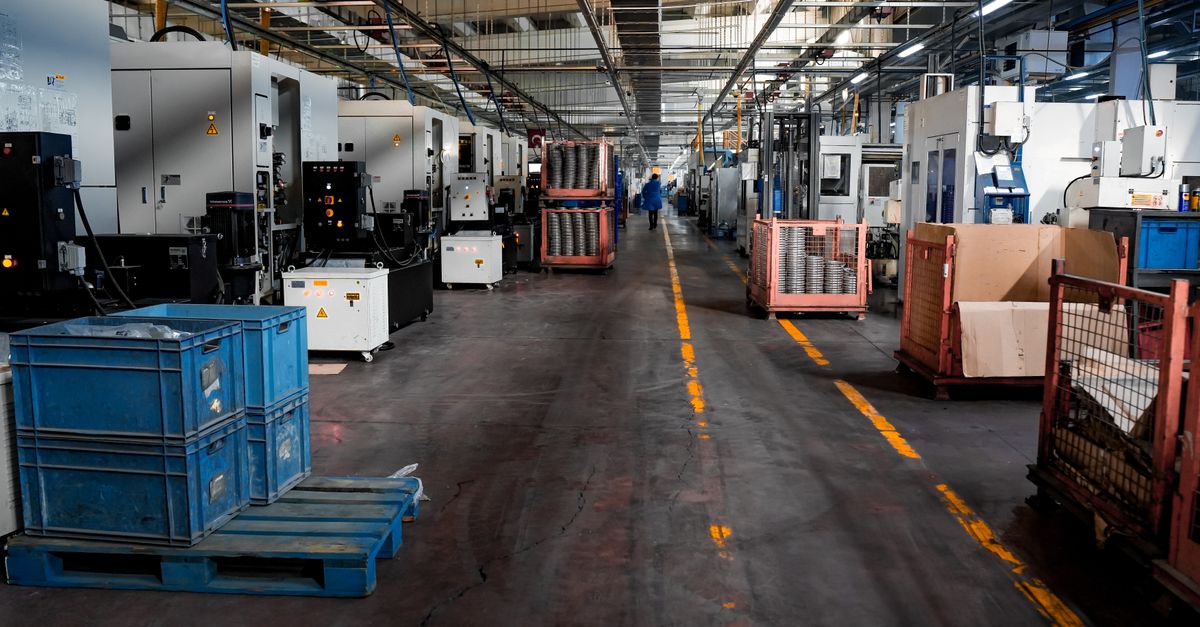
Most factories run slower than their owners think. The machines look busy, the line is moving, and yet a plant that appears "full" is often shipping 60-70% of what the same equipment could produce. The gap hides in small stops, slow cycles, changeovers, and quality rework that nobody adds up.
Manufacturing optimization is the discipline of finding that gap and closing it, in that order. You do not start by buying robots or a new line. You start by measuring how much good product the current line actually makes versus what it could make, then you attack the single biggest loss and prove the gain at the machine before moving on.
The one number that anchors this work is Overall Equipment Effectiveness (OEE): the share of planned production time that produces good parts at full speed. Get OEE honest, pick the biggest loss, fix it, remeasure. That loop, run relentlessly, beats any expensive silver bullet.
This manufacturing optimization guide covers how to calculate OEE without fooling yourself, how to break a bottleneck, how to catch quality problems at the source, and how to make improvements stick instead of drifting back within a quarter.
Calculate OEE honestly, or don't bother
OEE multiplies three factors: Availability (was the machine running when it should have been?), Performance (was it running at full designed speed?), and Quality (were the parts good the first time?). Each is a percentage, and you multiply them: 90% × 95% × 99% gives roughly 85% OEE, the widely-cited "world-class" benchmark from total productive maintenance practice.
Weak looks like a plant that reports 92% OEE and everyone celebrates, then you learn they only counted the hours the line actually ran and quietly excluded changeovers, the short-staffed second shift, and reworked parts shipped as good. The number is high because it measures the wrong denominator, so managers have no idea where their real losses are.
Strong looks like counting every minute of planned production time in the denominator, including planned changeovers, and only counting first-pass good parts in the numerator. An honest OEE is often 45-65% when you first measure it, and that low number is good news: the room to improve is real and sitting in front of you.
To do it: pick one bottleneck machine, and for two weeks log the planned time, the actual run time, the ideal cycle time versus real output, and the good-versus-total part count. A clipboard and a stopwatch beat a fancy dashboard fed by bad assumptions. Once you trust the raw numbers, automate the collection. To work out the score quickly, run them through our free OEE calculator — it computes Availability, Performance and Quality and flags which one is your biggest loss. If you also need the pace the line must run at to meet demand, our takt time calculator derives it from net available time and tells you whether your real cycle time can hit it.
Attack the biggest loss, not your favourite one
OEE decomposes into the "Six Big Losses": breakdowns and setup/changeover time (availability), small stops and reduced speed (performance), and startup rejects plus production defects (quality). The point of splitting them is to stop guessing. Instead of arguing about what to fix, you look at which loss bucket eats the most planned time and go there first.
Weak looks like an engineer who loves predictive maintenance spending six months instrumenting bearings, while the plant's real loss is 90-minute changeovers happening eight times a day. The work is competent and completely misdirected, because it targets the smallest of the six losses.
Strong looks like a team that Pareto-charts a month of loss data, sees changeovers account for 35% of lost time, and runs a SMED (single-minute exchange of die) project to convert internal setup steps into external ones done while the machine still runs.
| OEE factor | Common loss | Weak plant | Strong plant |
|---|---|---|---|
| Availability | Changeovers, breakdowns | Reacts to failures; setups take "however long they take" | SMED playbook; planned maintenance windows; failure logs feed prevention |
| Performance | Small stops, slow running | Operators nudge speed down to avoid jams; nobody logs it | Ideal cycle time posted; micro-stops counted and root-caused |
| Quality | Rework, startup scrap | Defects caught at final inspection, batches reworked | Defects caught at the station that made them; scrap trended daily |
To do it: build a Pareto of loss minutes by cause for one line over four weeks, then commit your improvement effort to the top bar and nothing else until it moves. This is a targeted slice of a full process optimization effort, focused where the data says the money is.
Throughput: find the bottleneck and stop starving it
Throughput is how many good units leave the line per hour, and it is governed by one machine: the bottleneck, the slowest step everything else depends on. A plant's total output can rise only if the bottleneck's output rises. Improving any non-bottleneck station just builds inventory in front of the constraint and feels productive while changing nothing.
Weak looks like a manager who buys a faster packing machine because packing "seemed slow," when the real constraint was the curing oven three stations upstream. Output does not move, but there is now a shiny machine and a bigger pile of work-in-progress waiting to be packed.
Strong looks like walking the line to find where work piles up in front of a station and starves the station after it. That pile marks the bottleneck. You then make sure the bottleneck never waits: it always has material, it never runs a defective part (waste there is irreplaceable capacity), and its changeovers are ruthlessly minimized.
To do it: over one shift, note where work-in-progress accumulates. That is your constraint. Protect it with a small buffer of good input so it is never starved, move quality checks upstream of it so it never processes a part that will later be scrapped, and schedule its maintenance for planned downtime. A mid-sized fabricator that simply stopped feeding scrap-bound blanks into its bottleneck press can recover real hours of capacity without spending a cent. The same constraint thinking drives smart supply chain optimization, because a supplier stockout can move the bottleneck outside your four walls entirely.
Quality: catch defects where they are made
Optimization dies if you buy speed by shipping defects. Every reworked or scrapped part consumed material, machine time, and labour, then produced negative value. The strong move is to catch defects at the station that creates them, not at a final inspection gate where you have already paid the full cost of the part.
Weak looks like final inspection culling bad units at the end of the line. By then the defect might be six stations and two hours old, the batch is contaminated, and the operator who caused it has made hundreds more the same way. Yield looks acceptable only because rework quietly patches the shortfall.
Strong looks like statistical process control charts at each critical station showing the operator, in real time, whether the process is drifting toward the tolerance limit before it produces a single bad part. Pair that with poka-yoke (mistake-proofing) fixtures that physically prevent a part from being assembled wrong, and defects stop being caught and start being prevented.
To do it: identify the three defect types that cause the most scrap and rework, then move detection as close to their source as possible with a control chart, a simple go/no-go gauge, or a fixture that only fits the correct orientation. Track first-pass yield per station, not just plant-wide. This station-level rigour is the operational core of any real quality management program.
Make the gains stick with standardized work
The most common failure in manufacturing optimization is not making an improvement; it is watching it evaporate. A team runs a kaizen event, cuts changeover time in half, celebrates, and within two months the setup has crept back because the new method was never written down or trained.
Weak looks like improvement living in one skilled operator's head. When that person is on leave or leaves the company, the line reverts to the old, slower way and nobody notices until the numbers sag.
Strong looks like every improved process captured as standardized work: the exact sequence, the timing, and the quality checks, posted at the station. The standard becomes the baseline the next kaizen improves on, so gains compound instead of resetting.
To do it: after any successful improvement, document the new method as the standard, train every operator on it, and audit adherence weekly for the first month. Favour small, frequent kaizen changes over big-bang projects, because small changes are easier to standardize and to reverse if they backfire. Building this habit is really about operational excellence as a daily culture rather than a one-off campaign.
Build a scoreboard the floor actually reads
Optimization needs a visible, current, trusted number on the wall, not a monthly PDF that reaches the plant a week late. When operators can see the line's OEE, throughput, and first-pass yield in real time, they self-correct. When the number hides in a manager's spreadsheet, they cannot.
A weak scoreboard is a slick executive dashboard nobody on the floor has seen, showing last month's averages. A strong scoreboard is a simple screen or even a whiteboard at the line, updated by shift, showing today's OEE versus target and the top loss reason right now, so the team reacts before the shift ends rather than explaining a bad month afterward. Post three numbers per line, make the target and the biggest current loss visible, and review them in a five-minute stand-up at shift change.
Key takeaways
- Optimization is a loop: measure, target the biggest loss, fix, remeasure, repeat. It is not buying equipment first.
- Calculate OEE honestly. A real starting number of 45-65% is normal and shows genuine room to improve; a flattering 90% usually means the wrong denominator.
- Improve only the bottleneck. Speeding up any other station just grows work-in-progress without adding throughput.
- Catch defects at the station that makes them. A part scrapped at final inspection wasted all its material, machine time, and labour.
- Standardize every gain as documented, trained work, or it drifts back within a quarter.
- Put a live scoreboard at the line so operators self-correct during the shift, not after it.
Frequently asked questions
What is a good OEE score to aim for? The widely-cited "world-class" benchmark is roughly 85%, built from about 90% availability, 95% performance, and 99% quality. Most plants start in the 45-65% range once they measure honestly, so a realistic first target is to improve your own baseline by 10-15 points on the bottleneck line. Chasing 85% everywhere at once usually spreads effort too thin to move any single number.
Should I improve OEE on every machine? No. Improve OEE only on the bottleneck, the slowest step that governs the whole line's output. Raising OEE on a non-constraint machine produces more parts that simply wait in front of the bottleneck, adding inventory and cost without adding a shippable unit. Once you break one constraint, the bottleneck moves, and you repeat the analysis there.
How is manufacturing optimization different from automation? Optimization removes waste from the process you already have, often with cheap changes like faster changeovers, mistake-proofing fixtures, and standardized work. Automation adds technology to run steps with less human input. Automating a wasteful process just makes the waste happen faster, so optimize the process first, then decide what is worth automating, as covered in the manufacturing automation guide.
Where should a plant start if OEE is a new concept? Start with one line, ideally the bottleneck, and measure availability, performance, and quality by hand for two weeks with a clipboard and stopwatch. Trust the raw numbers before you invest in automated data collection, because a dashboard fed by bad assumptions is worse than an honest clipboard. Then Pareto the losses and attack the largest one.
Who should own manufacturing optimization? Line operators own the daily execution because they see losses first, but the effort needs an owner with authority to fund fixes and hold the standard, usually a plant or operations leader. In a growing company this often sits with the operations chief, and the broader remit is laid out in the manufacturing COO guide. Clear ownership stops improvements stalling between shifts.
How do we stop improvements from slipping back? Capture every gain as standardized work: the exact steps, timing, and quality checks, posted at the station and trained to every operator. Audit adherence weekly for the first month, and make the new standard the baseline that the next improvement builds on. Without a written, trained standard, a process reliably drifts back to its old state within a quarter.